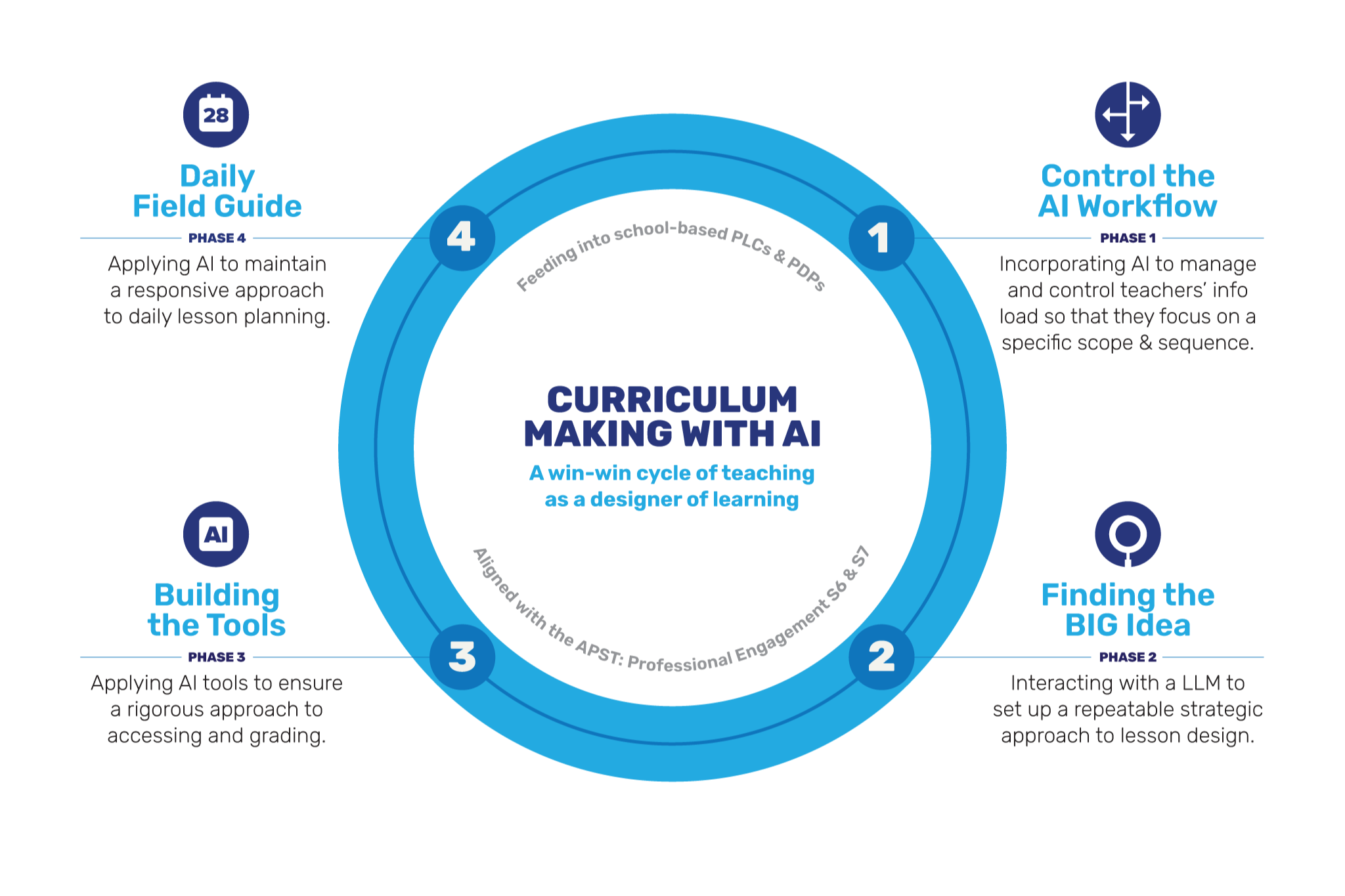
Curriculum Making with AI
A 4-Phase Methodology
Phase 1. What does 'control the AI workflow' mean?
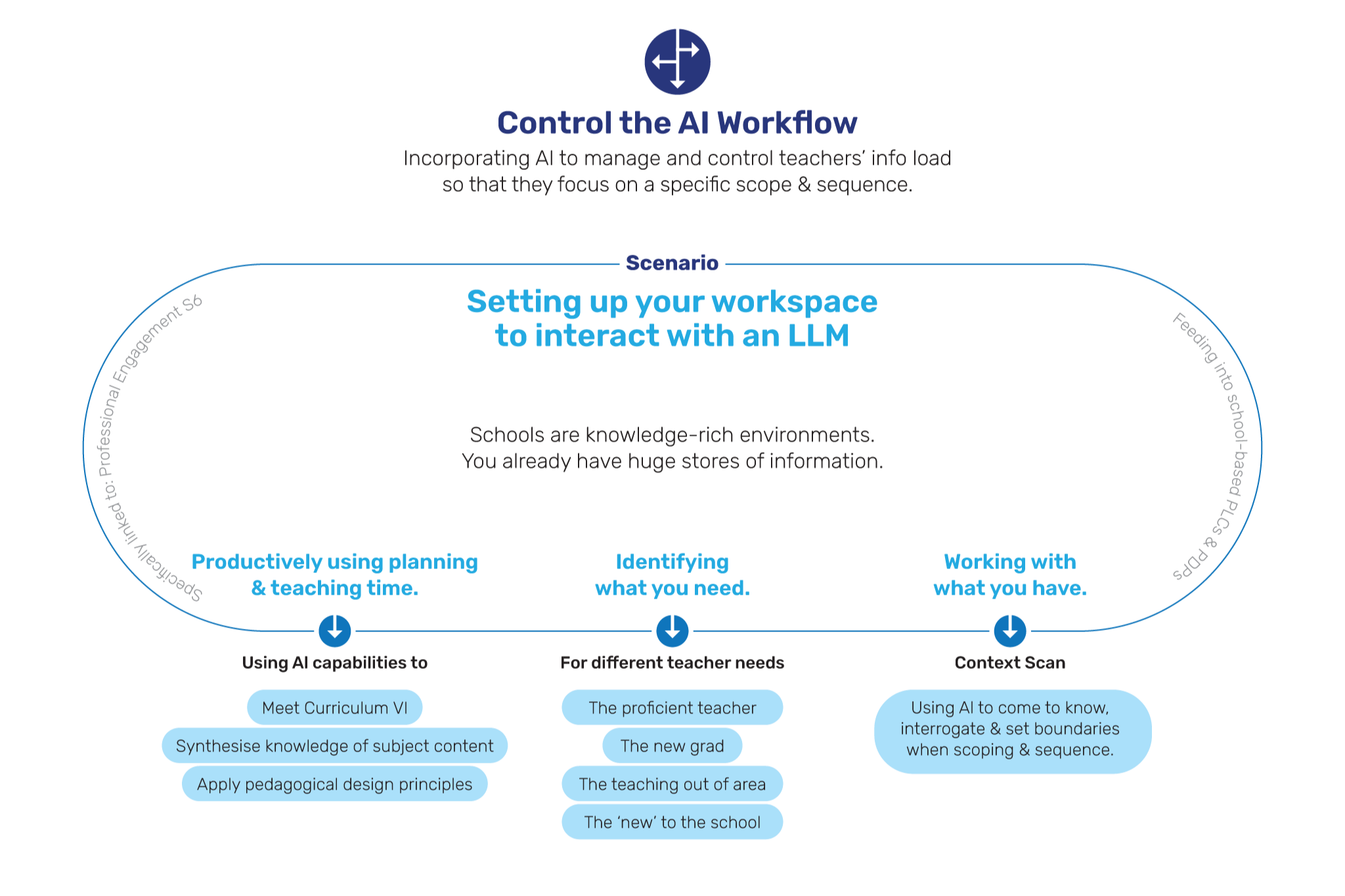
This phase is all about starting well - as much physically as conceptually. The advent of Large Language Models has been called 'the 4th Industrial Revolution'. It is a very big change to have a technology can no longer be classified a 'tool' but an 'agent'. How can we NOT imagine its impact on education. Here are the key elements that we have used to design Phase 1 of curriculum making with AI. They are crafted to highlight the conceptual framework of the 'Teacher as Designer' and anticipate how AI will shift your workflow.
Elevating Professional Learning Through APST 6.
Context is Everything
Putting AI "On a Leash"
Balancing Compliance with Creativity
Does Content Have A Bottom Line?
Phase 2. What does 'finding the BIG idea' mean?
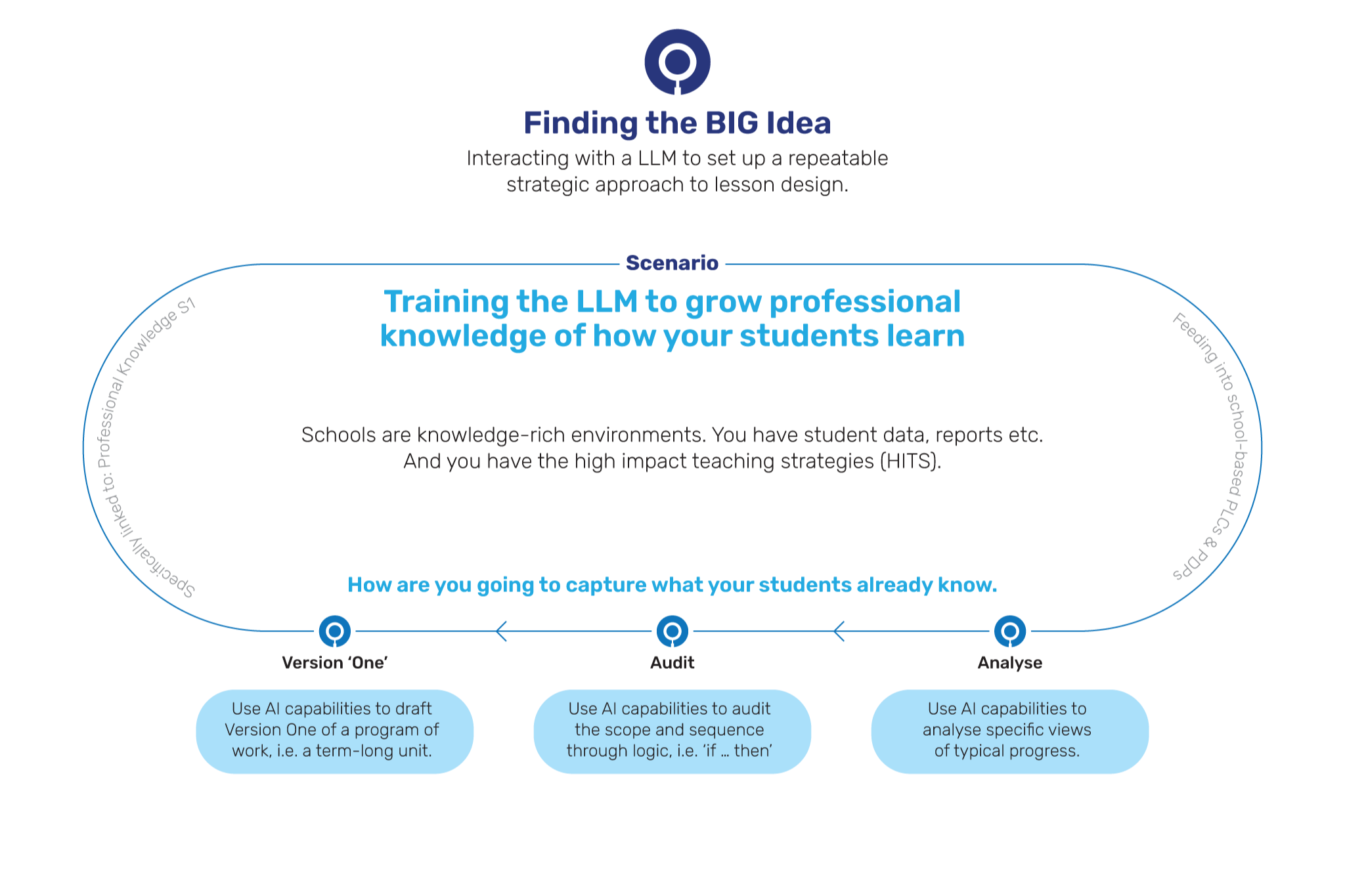
If Phase 1 is about taming the information, Phase 2 is about finding the meaning. In this phase of the Curriculum Makers methodology, you shift your focus from simply "managing content coverage" to rigorously designing for student understanding.
We ensure you approach the technology with a designer’s mindset. Here are the core insights that drive Phase 2:
From "Coverage" to "Typical Progress"
The "If... Then" Logic Audit
Synthesising the "Big Idea"
Training the AI (Not the Other Way Around)
Elevating Professional Practice (APST 1)
Phase 3. What does 'building the tools' mean?
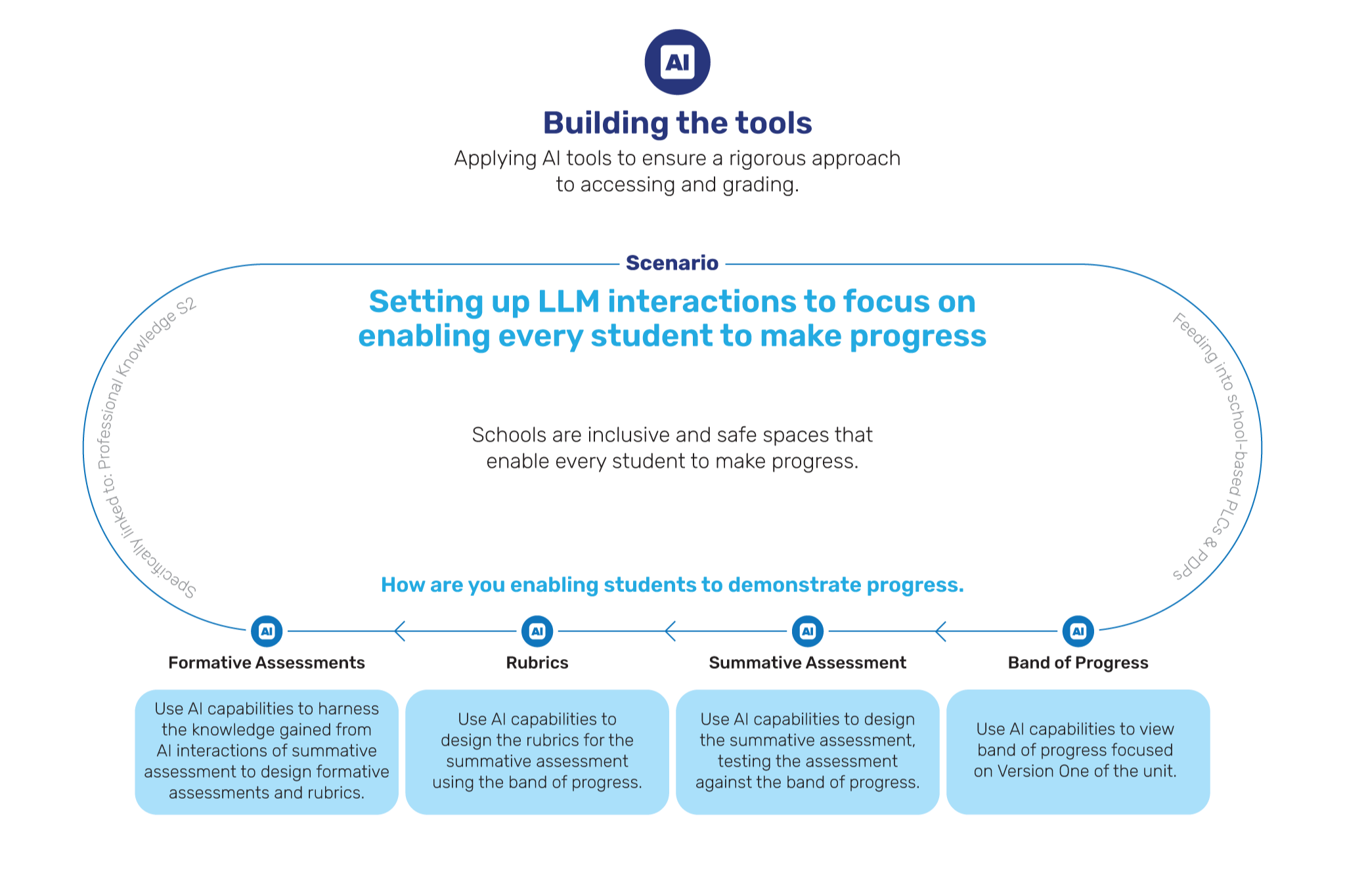
If Phase 2 is about finding the "Big Idea," Phase 3 is about enabling your students demonstrate that they learned it. In this phase, we tackle the heavy administrative lifting of teaching—rubrics and grading—by shifting your mindset from treating assessment as a retrospective afterthought to treating it as the rigorous anchor of your entire unit.
Embracing True Backward Design
Designing for a "Band of Progress"
Dealing with the "Rubric Pain Point":
Teacher Judgment & Being Inclusive
The Summative-to-Formative Link
Elevating Professional Practice (APST 2)
Phase 4. What does 'maintaining a responsive approach to daily lesson planning' mean?
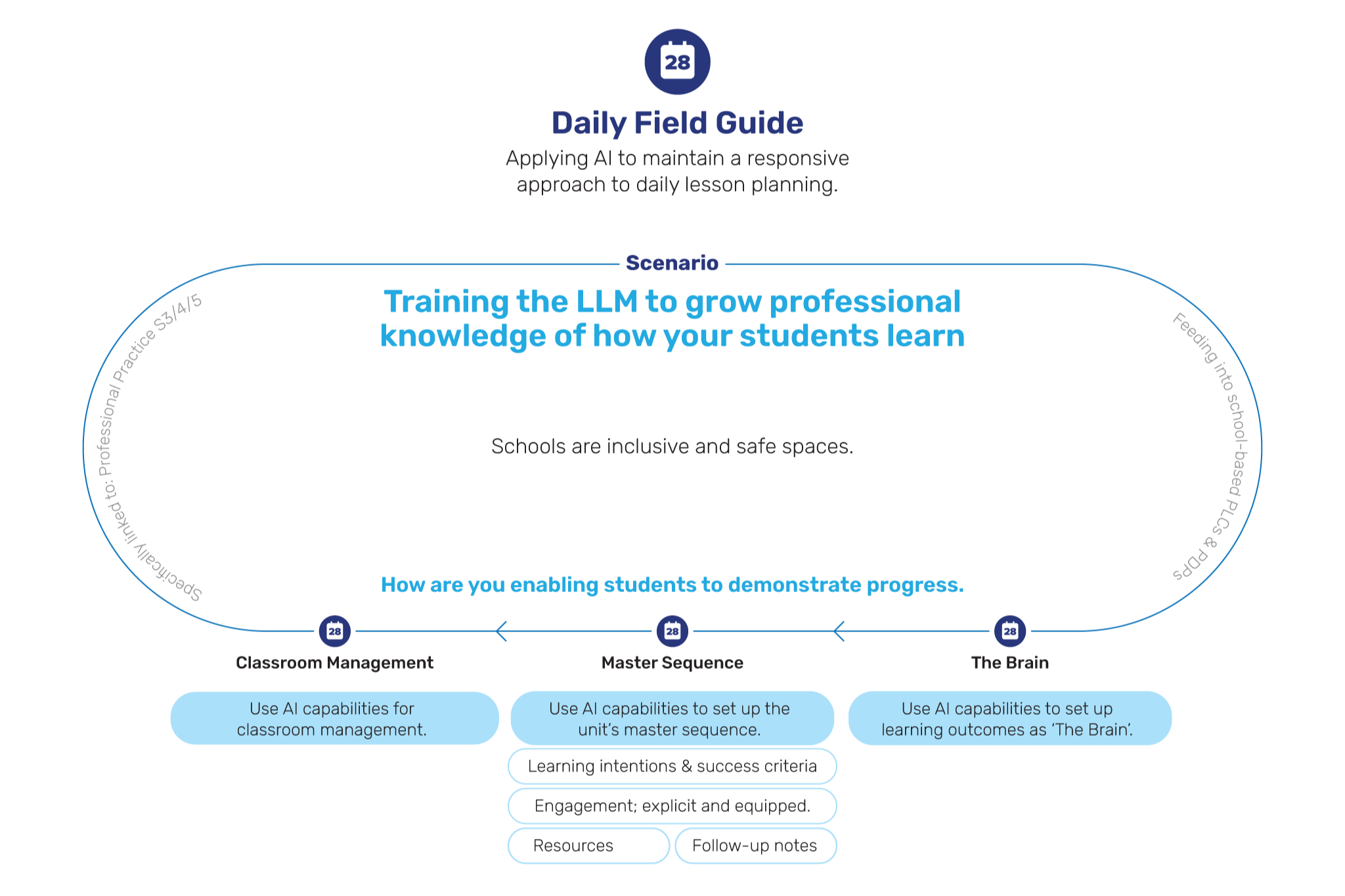
Traditionally, the "daily lesson plan" is where planning both begins and ends. You stare at a blank proforma, fill in the boxes, and hope it survives contact with the classroom. In the final phase of the Curriculum Makers methodology, you will learn that the daily plan can be responsive and ongoingly vital.