
Our First Curriculum Planning Interactions With A LLM
May 27, 2026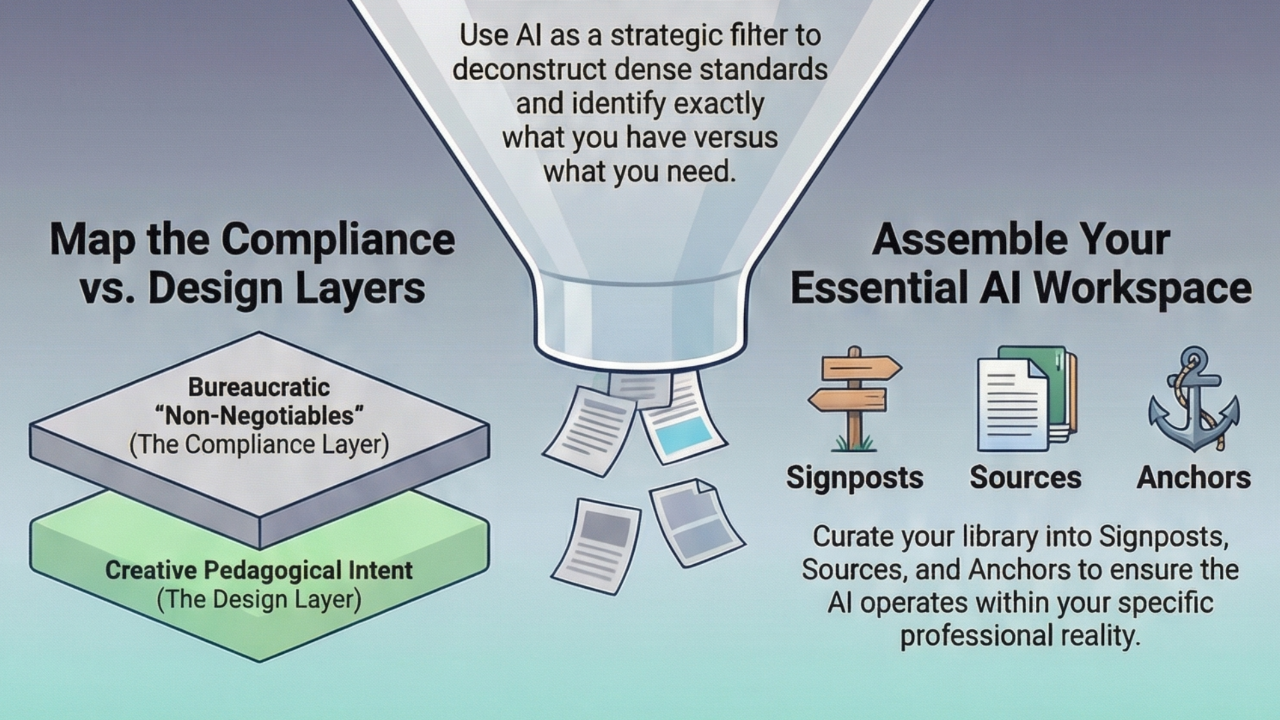
The image you see at the start of this blog is just one of many expressions we came up with through our interactions with AI for curriculum planning. There are some basic truths in it that we are still trying to achieve. Namely, placing the AI alongside the teacher's agency and judgement, in an interactive dialogue that does not underestimate the effects of the AI on the human experience.
Today, there are so many references to keeping the human-in-the-loop, which is shorthand for just who is making the decisions. As teachers perform the role of loco parentis, determining what that means is vital for keeping our students safe, and yet prepared for meeting a much more automated world.
Born out of our own professional commitment towards that end, as co-founders of Curriculum Makers, our method of interacting with AI is obsessed with supporting curriculum leaders who, we see as the linchpins if AI technology can be employed to perform the awesome task of ensuring in schools enable every student to make progress in their learning. So, we are trying to answer two questions.
- What would a coherent end-to-end system look like that gives curriculum leaders the control and oversight of the AI when they use it for collaboratively planning, delivering and assessing curricula with their staff?
- What processes would assist curriculum leaders to know when, where and how AI interactions could be used to ensure that curricula meets every student learning needs?
What we've managed to work out
As we thought about the on-going tasks that work their way through the annual scope and sequence of year groups and subjects, we noticed the hundreds of variables that the job entails
There are all the elements of the their Curriculum Framework. Then, there are the many issues that need to be managed regarding classrooms and schoolyard, for instance, School-wide Positive Behaviour Support (SWPBS). By no means least, schools also deal with all factors related to diversity (physical, cultural and social) because, luckily, we live and celebrate diversity, equity and inclusion in Australia.
All of these factors impact how a school cares for their students. All point to the many pain points which technology has been telling us for decades that it will solve for us!
Something positive did start to happen.
On the positive side, we discovered that we could cluster the changes brought about by AI technologies on planning, delivering or assessing curricula. This is one of our early drawings of the process we have been forming.
[Click on the image to enlarge it]
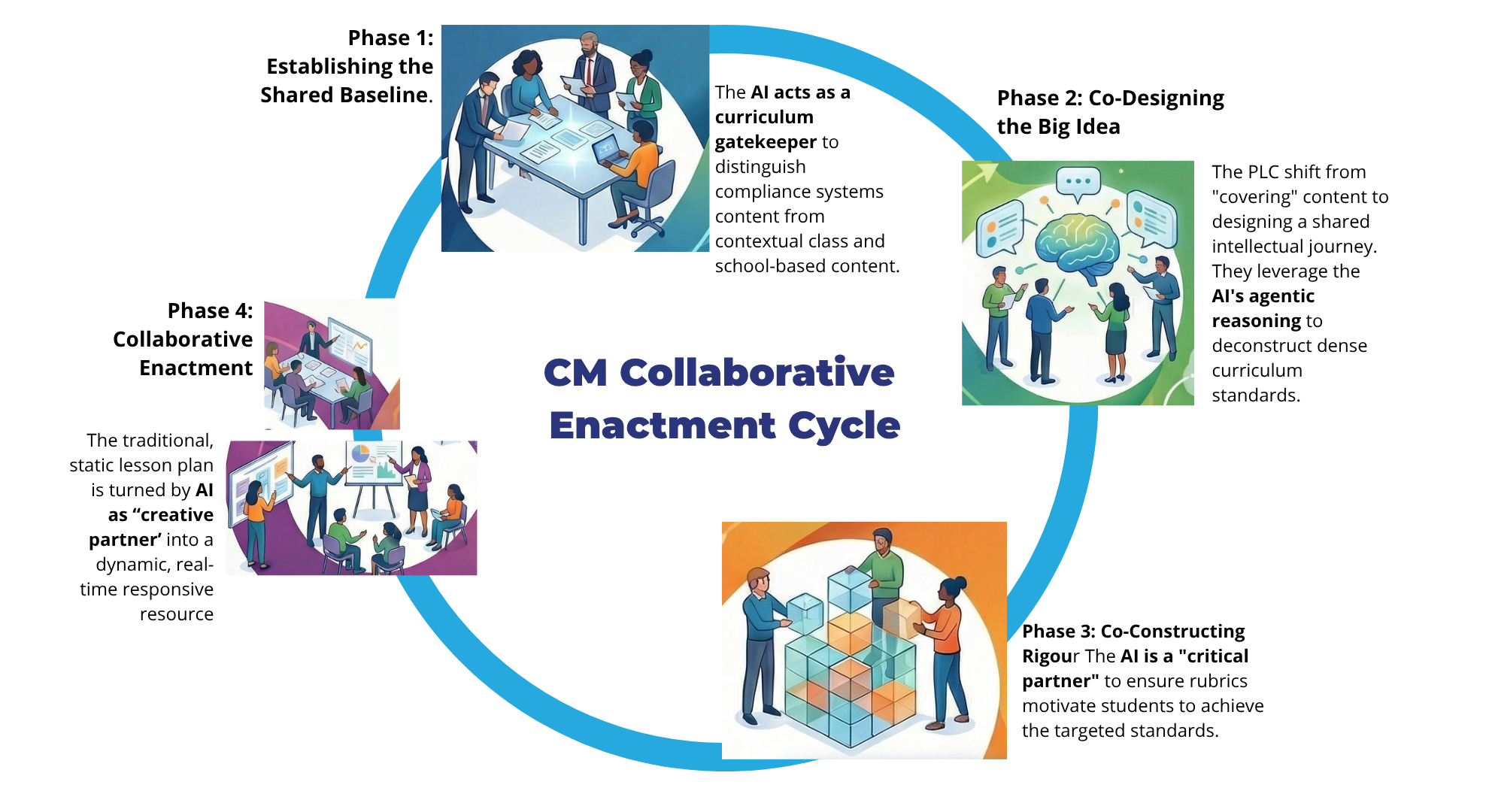
However, the flat image doesn't do justice to the growth that the process of interacting with an AI brings with it. Most importantly, we noticed that the process continually moves us between the phases, while we still continue to apply well-known planning methods such as backward design model.
Ironically, we found ourselves priming the AI to be more consistent than we were prepared to be in our brainstorming discussions. To do this we devised a form of document we called a chat log on which we keep track of its responses, for instance, its analyses of the knowledge, understanding and skills inferred in the content descriptors. In turn, this allowed us to cross-check with students formal results (e.g. their NAPLAN results)
Consequently, this is what we learned through the first lot of LLM interactions.
What we discovered, in turn, was that the first lot of interactions with the AI is about the humans agreeing on all the key components of curriculum planning. So, we invented the term shared baseline to described what it means for colleagues to agree on the focus of the unit of work: understanding how it fits into the annual scope and sequence, choosing the achievement standards and content descriptors and placing any formal data alongside them to view how students might engage with the concepts and skills offered in the programme.
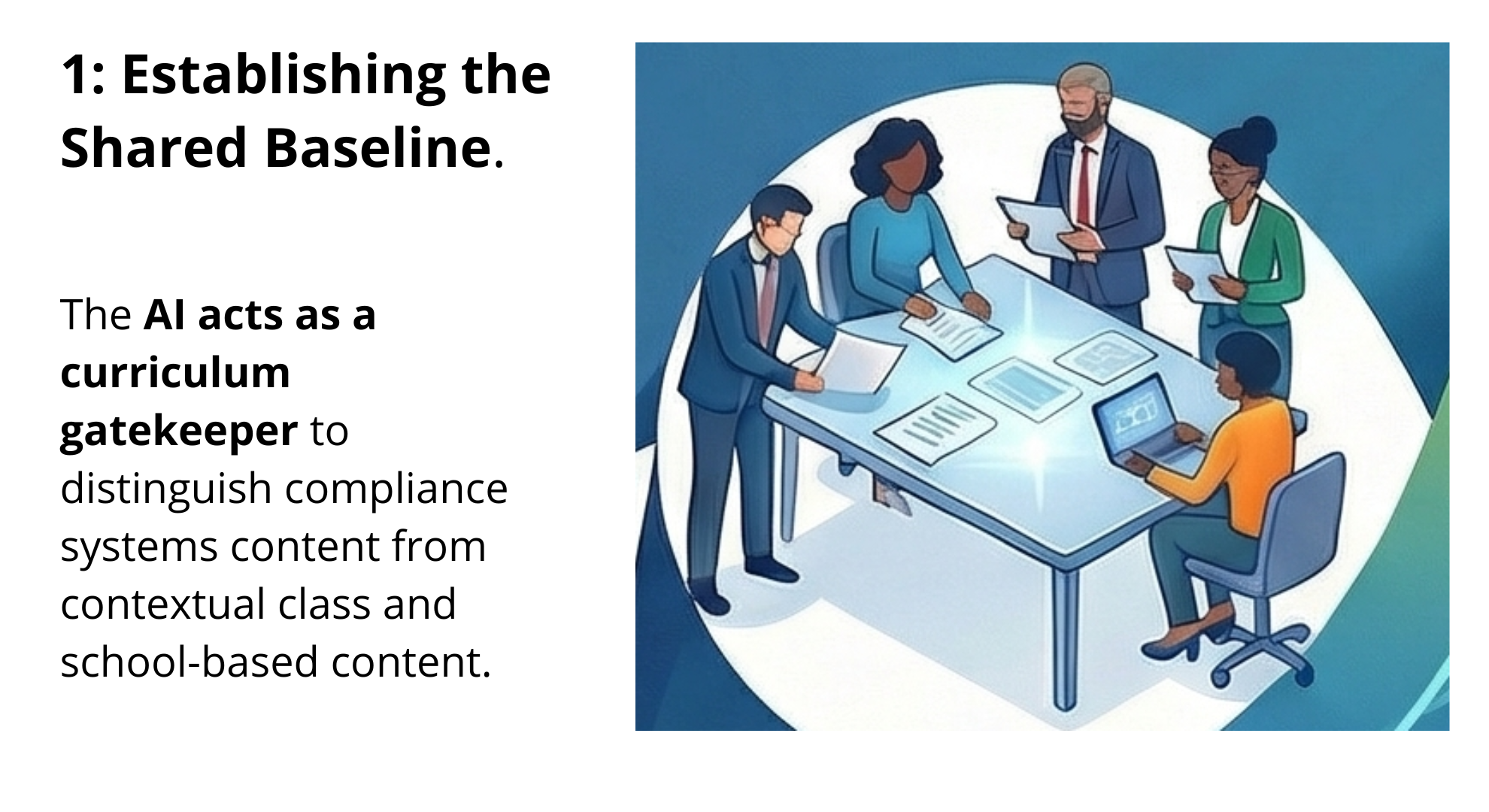
We also came up with the term 'curriculum gatekeeper' for the phenomenon we observed about our interactions with the Large Language Model. Firstly, like teachers on afternoon duty at the school gate, the LLM needed to carry out its duty on the boundary between the content of the mandated learning outcomes and the content of tasks and activities that the teachers had created in the existing unit of work.
We taught the LLM to value documents we called anchor documents: these were like the school property. They denoted the Curriculum Framework and other official documents. This allowed us to interact with it and ask it to analyse and evaluate the teacher-created content in relation to the content descriptors and achievement process.
It only took a few attempts on different programmes to achieve a number of positives through our interactions with the LLM:
- We felt more knowledgeable and appreciative of the existing unit, of the hard work that we had already done.
- We had purposeful improvements to make when we placed our student data alongside the unit;
- We were confident that each teacher could 'tweak' the unit to meet the needs of their class and
- We had collectively achieve the redraft of the unit ready to move on and do further work on the 'big idea' and the knowledge, understandings and skills were were going to teach in the unit.
Oh no, not more jargon!
The newness of the AI experiences had us floundering to understanding the processes in which we had once known as 'curriculum planning'. We didn't set out to do it, but as soon as we tried to explain the processes to other people we found we were using new AI-centric terms. Just in the first part of our investigation we had come up with four new terms:
- chat log - our cut and paste documentation of the prompts we used and the LLM's responses to them
- shared baseline - the consensus we achieved about what we were doing and its importance in teaching our students
- curriculum gatekeeper - the role we gave the AI at the outset to ensure it kept an eye of the curriculum boundary e.g. the mandated curriculum framework documents we use to plan and assess
- anchor documents - the name we gave to the AI to identify the really important curriculum documents on which based our teaching.
Dear Principals & Curriculum Leaders
Use the link here to learn more about us and join our free AI Curriculum Makers Community. Think of the Community as a space in which you need for information meets the equal need to share your views on AI in Education. We welcome PLCs who are undertaking a special curriculum inquiry - post, talk and watch demonstrates of curriculum explorations.
Stay connected with news and updates!
Join our mailing list to receive the latest news and updates from our team.
Don't worry, your information will not be shared.
We hate SPAM. We will never sell your information, for any reason.