
Spotlighting the Humility Factor in the Castlereagh Statement
Apr 05, 2026
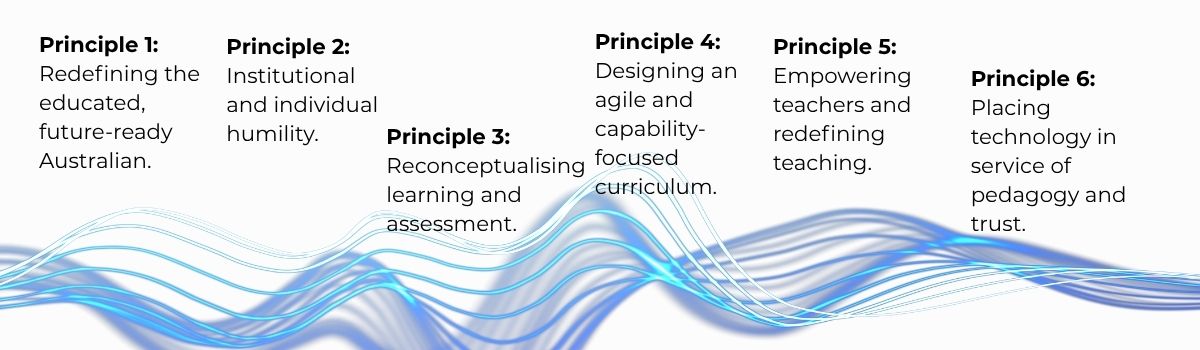
At the very least, when read the six principles presented in the Castlereagh Statement, I see an attempt to define this moment, culturally and pedagogically, for keeping the 'human in the loop',
This provokes me into thinking about how educational history shows us striving to be 'student-centre'. Arguably, evident from the time of the Enlightenment, e.g. from the writings of Johann Heinrich Pestalozzi in the early 1800s, then further substantiated in the late-19th and early-20th century by John Dewey, who in seeing education as a social process and "learning by doing", hoped that students were transformed from passive listeners into active investigators.
Then, in the mid 1990s figures like Jean Piaget developed the theory of Cognitive Constructivism and Lev Vygotsky his theory of Zone of Proximal Development (ZPD). And so we put in place the idea of 'scaffolding'. Now in the digital age, concepts of Personalised Learning and Differentiated Instruction emphasise that teachers must adapt content, process, and product to suit individual student readiness.
What of teacher-wellbeing?
The second principle also provokes into thinking about how technological solutions relate to alleviating the teacher's . The lessons of teaching and learning during the COVID pandemic, the number of teachers walking away from the profession and, most recently, teachers striking teachers also become implicated in how we come to realise AI in Education.
I note how the principles refer to 'redefining' and 'reconceptualising', signalling to redress the status quo. However, we must not underestimate how in historical terms concepts can be difficult to unpack because they become conflated with unintended meanings. For instance, as a curriculum officer based in a district office, I often witness how 'learning styles' was conflated with differentiated instruction. For instance, cognitive scientist, Paul Howard-Jones is widely to debunking "Learning Styles" from 2014 and his systematic review published in Nature Reviews Neuroscience. Conversely, what Jay McTighe's and Carol Ann Tomlinson's collaboration in Integrating Differentiated Instruction & Understanding by Design: Connecting Content and Kids (2006) makes clear, that while the "Big Ideas" (the content) remain rigorous and fixed, the pathways to them are adapted to meet the diverse needs of every student .
What's so special about Principle 2?
I see the second principle as vitally important to redressing the current situation. Its marshalling of 'Institutional and individual humility' demonstrates how a ‘unified national vision’ starts in the 'secular' reading of humility as the learning new things. However, I want to add that a historical view of the term adds to its significance because it shows how the term evolved from a number of origins, adding to the depth and breadth of scenarios that unfold when different elements of the principle are realised.
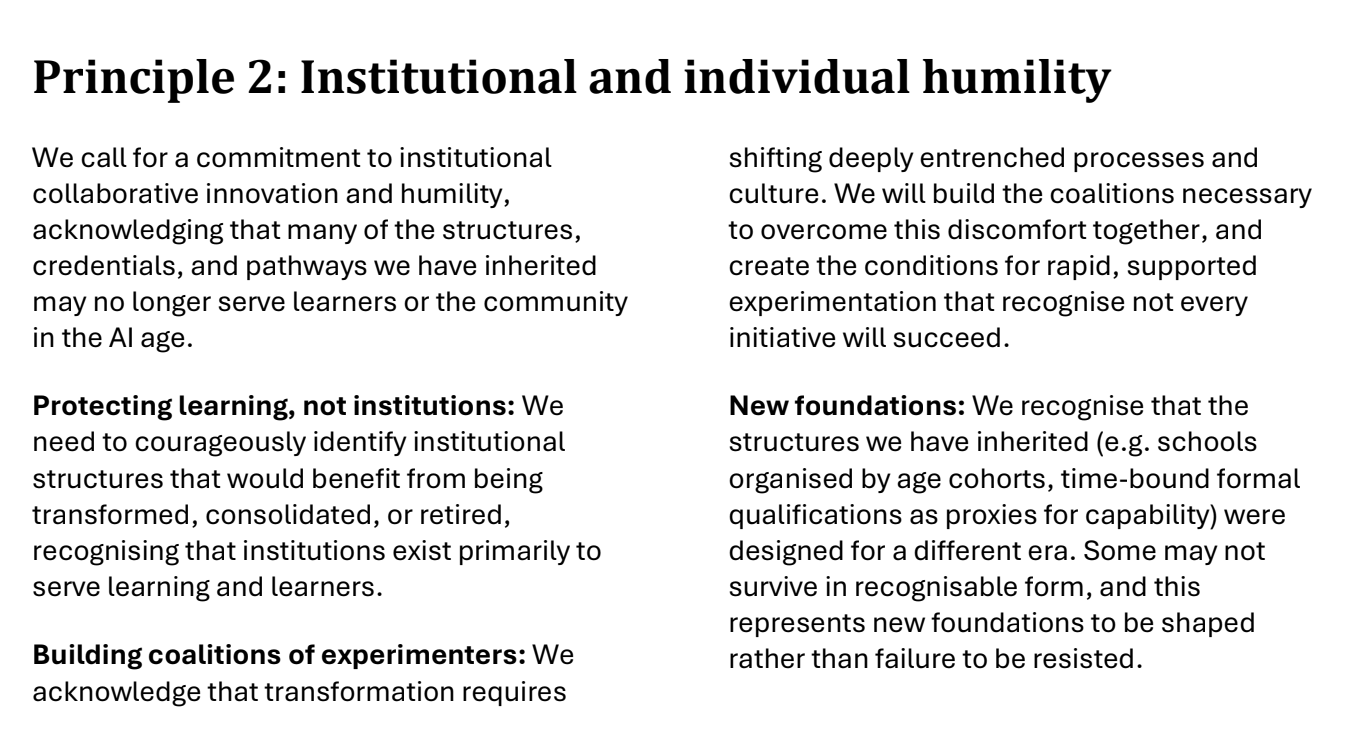
What this should tell us is why it is not always obvious to behave with humility when trying to form an essential belief or complete a challenging quest for meaning. The following chart is only a 'wikipedia-type' exploration of the term, but, nonetheless, it shows the diversity of meanings of the term.

Then there's the "Humility Paradox" to consider. As many religious texts note, the moment you realise you are humble, you have likely lost it. This makes it the only virtue that "disappears" the moment it is claimed. Such as the Parable of the Pharisee and the Tax Collector illustrates when the Pharisee's prayer declares "God, I thank you that I am not like other people—robbers, evildoers, adulterers—or even like this tax collector. I fast twice a week and give a tenth of all I get."
Why does this matter?
As I read it, the idea of calling "for a commitment to institutional collaborative innovation and humility" seals the relationship between AI in Education with human cognition. For instance, in the past fifteen years, cognitive scientists Drs Barbara Oakley and Terry Sejnowski, have popularised ‘learning to learn’ in their Coursera MOOC course for teaching secondary and undergraduate students.
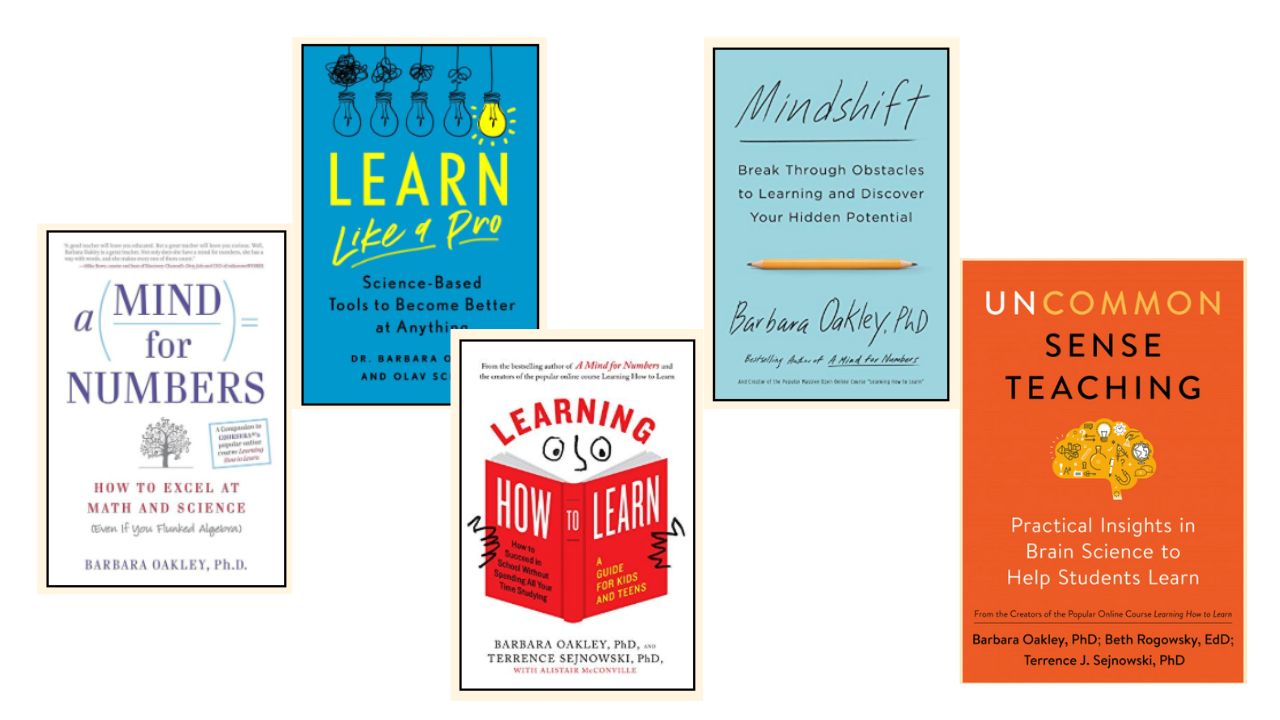
Through applying theories of Embodied Cognition and Conceptual Metaphor, they emphasize that learning and problem-solving are an oscillating process. You cannot stay in one mode forever:
- Focused mode is for doing: calculating, writing, or memorising. It provides the "raw data" for the brain to work with.
- Diffuse mode is for understanding: synthesising information and overcoming "Einstellung"—a cognitive bias where you get stuck on a wrong approach because you are focusing too hard on it.
From this point, I'll stop speculating. Instead, I look forward to better understanding what the organisers of the Castlereagh Statement have in mind with their inclusion of 'humility' as a key principle for their initiative.
Dear Principals & Curriculum Leaders
Use the link here to learn more about us and join our free AI Curriculum Makers Community. Think of the Community as a space in which you need for information meets the equal need to share your views on AI in Education. We welcome PLCs who are undertaking a special curriculum inquiry - post, talk and watch demonstrates of curriculum explorations.
Stay connected with news and updates!
Join our mailing list to receive the latest news and updates from our team.
Don't worry, your information will not be shared.
We hate SPAM. We will never sell your information, for any reason.